2026 guide to hard water stains in North Texas homes: what works on glass, chrome, tile, granite and toilets, what damages them, and when to call a pro.
Hard water stains are mineral deposits — mostly calcium and magnesium — left behind when water evaporates. On most surfaces an acidic cleaner such as white vinegar or a commercial limescale remover dissolves them, but the method has to match the surface: vinegar is fine on glass and chrome, and it will etch natural stone like granite, marble, and travertine. As of September 2026, if the buildup is thick enough that a soak does not move it, a professional deep clean in the DFW area runs $200–$450 and includes descaling fixtures, glass, and tile.
North Texas homes deal with this constantly. Water across much of the Dallas–Fort Worth area is moderately hard to hard, which is why that white crust shows up on showerheads, faucets, dishwashers, and glass doors no matter how often you wipe. This guide covers what the stains actually are, what works on each surface, what to avoid, and how to keep them from coming back.
What Hard Water Stains Actually Are
"Hard" water simply contains more dissolved minerals. The U.S. Geological Survey's explainer on water hardness describes it as a measure of calcium and magnesium, the same minerals that form scale in pipes and kettles. When a droplet of that water dries on a surface, the water leaves but the minerals stay. Repeat that a few hundred times and you have a visible white or chalky layer.
That is why the stains concentrate in predictable places:
- Shower glass and doors, where water beads and evaporates after every shower.
- Faucets, handles, and showerheads, where water drips and dries.
- Toilet bowls, where a ring forms at the waterline.
- Tile and grout in showers, especially low on the walls.
- Dishwashers and glassware, where a white film builds up.
- Kettles and coffee makers, where scale builds inside.
Hard water stains are not dirt, and they are not mildew. Soap and scrubbing alone barely touch them because mineral deposits do not dissolve in plain water or detergent. That is the single most important thing to understand: you need an acid, or you need time and friction, and usually both.
What Works on Each Surface
| Surface | What works | What to avoid |
|---|---|---|
| Glass shower doors | White vinegar or a limescale remover, then a non-scratch pad and squeegee | Abrasive powders, steel wool, razor blades on coated glass |
| Chrome and stainless fixtures | Vinegar-soaked cloth wrapped on for 20–30 minutes, then wipe | Abrasive scrubbers that scratch the finish |
| Removable showerheads | Soak in vinegar, then scrub nozzles with an old toothbrush | Bleach, which does nothing for minerals |
| Porcelain toilet bowl | Toilet limescale product or vinegar, pumice stone on wet porcelain for old rings | Pumice on colored or damaged finishes, mixing products |
| Ceramic and porcelain tile | Vinegar solution or tile-safe descaler, soft brush | Leaving acid on grout for long periods |
| Granite, marble, travertine | Stone-safe cleaner only; call a pro for etching | Vinegar, lemon, and any acidic cleaner |
| Dishwasher interior | Run an empty cycle with a dishwasher cleaner or a cup of vinegar on the top rack | Mixing with bleach-based products |
Step by Step: Glass Shower Doors
Shower glass is where hard water is most visible and most frustrating.
- Rinse and dry first. Remove soap residue with warm water so the acid reaches the mineral layer.
- Apply the acid. Spray undiluted white vinegar (warmed slightly helps) or a commercial limescale remover across the glass. Let it sit for 10 to 15 minutes, re-spraying if it dries.
- Scrub gently. Use a non-scratch sponge or a microfiber scrubbing pad in circular motions.
- Rinse thoroughly with clean water.
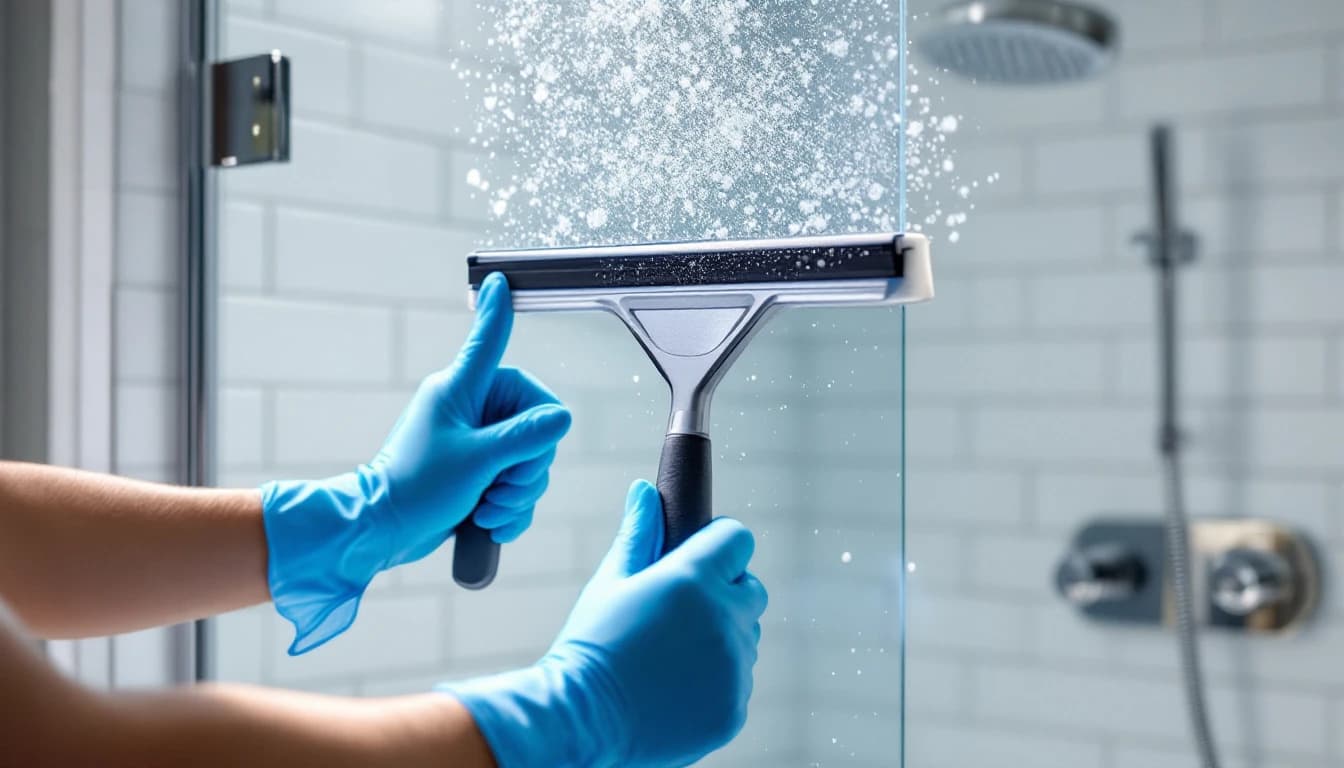
- Squeegee and dry. Leaving the glass wet starts the cycle again.
For heavy, years-old buildup, expect to repeat the process two or three times. If the glass still looks cloudy after that, the surface may be etched rather than coated — the minerals have actually pitted the glass. Etching does not come off with cleaning; at that point the realistic options are a glass restoration product or professional restoration, and from then on keeping it dry.
A caution on coated glass: many newer shower doors have a factory protective coating. Razor scraping and harsh abrasives remove that coating permanently, so check with the installer or manufacturer if you are unsure.
Faucets, Handles, and Showerheads
Fixtures are the easiest win.
- Wrap method. Soak a paper towel or cloth in white vinegar, wrap it around the faucet or spout, and leave it 20 to 30 minutes. The acid dissolves buildup around the base and aerator. Wipe clean and dry with a soft cloth.
- Showerhead soak. If it unscrews, soak it in a bowl of vinegar for an hour. If not, fill a plastic bag with vinegar, secure it around the head with a rubber band, and leave it for an hour or more. Scrub the nozzles with a soft toothbrush and run hot water through.
- Aerators. Unscrew the aerator at the tip of the kitchen faucet and soak it too; scale there reduces water flow.
Be careful with specialty finishes such as matte black, brushed gold, or oil-rubbed bronze. Some manufacturers advise against acids on those finishes; a mild soap solution and more frequent drying is the safer approach.
Toilet Rings
The ring at the waterline is usually mineral scale that has trapped staining over time.
- Lower the water level (turn off the supply valve and flush) so the ring is exposed.
- Apply a toilet limescale product or undiluted vinegar and let it work.
- Scrub with a toilet brush. For stubborn rings on white porcelain, a wet pumice stone removes scale without scratching — keep both the stone and the porcelain wet the whole time.
Never combine toilet bowl cleaners with bleach or other products "for extra strength." Some combinations release toxic gases; our guide to cleaning chemicals you should never mix explains why.
Tile and Grout
In showers, hard water leaves a haze on tile and can dull grout.
- Use a diluted vinegar solution or a tile-safe descaler on ceramic and porcelain tile.
- Scrub grout lines with a soft brush and rinse promptly — do not let acid sit on grout for long, since repeated acid exposure can wear cementitious grout over time.
- If grout is also dark or spotted, you may be dealing with mildew as well as minerals. That needs a different approach; the EPA's guidance on mold is the right starting point for moisture problems.
Natural Stone: Where People Get It Wrong
Granite, marble, travertine, limestone, and many "cultured stone" shower surfaces react with acid. Vinegar, lemon juice, and most limescale removers etch stone — they leave dull spots that look like water marks but are actually damage to the surface.
On stone:
- Use only a pH-neutral cleaner labeled safe for natural stone.
- Wipe and dry fixtures and edges after use to stop buildup before it starts.
- If there is heavy mineral buildup on stone, or existing dull etch marks, that is a restoration job for a stone specialist, not a cleaning job.
This is one of the most common mistakes we see in DFW homes with stone vanities and shower surrounds: a homeowner reads that vinegar removes hard water and ruins a marble countertop in five minutes. When our crews clean a home, we identify the surface before we choose the product.
Dishwashers and Glassware
If glasses come out cloudy, that film is often mineral residue.
- Run an empty cycle with a dishwasher cleaner, or with a cup of vinegar upright on the top rack.
- Clean the filter at the bottom of the tub.
- Use a rinse aid, which helps water sheet off instead of drying in droplets.
If a glass stays cloudy after a vinegar soak, it may be etched, which is permanent.
Keeping Hard Water Stains From Coming Back
Removing the stains is the hard part. Keeping them away takes about thirty seconds a day:
- Squeegee the shower glass after every shower. This single habit prevents most glass buildup.
- Dry fixtures with a microfiber cloth when you are already wiping the counter.
- Run the bathroom exhaust fan during and after showers so surfaces dry faster.
- Descale monthly — a quick vinegar wipe on glass and fixtures before the layer builds.
- Consider water treatment. A whole-home softener or a filtered showerhead reduces minerals at the source. That is a plumbing decision, not a cleaning one, but it changes how much scrubbing you do.
Recurring professional cleaning keeps buildup from ever getting thick. On a weekly or bi weekly cleaning service schedule, fixtures and glass get attention every visit, which is why recurring clients rarely need heavy descaling.
When to Call a Professional
DIY works for light to moderate buildup. It makes sense to hand the job to a pro when:
- the buildup has been there for months or years and several soaks have not moved it,
- the home has natural stone surfaces and you are not sure what is safe,
- you are moving out and need glass, fixtures, and tile clean enough to pass a landlord's walkthrough — our guide to what landlords look for at move-out lists hard water as a common deduction,
- or you would simply rather spend the weekend doing something else.
For pricing context: standard cleaning runs $120–$250 and includes wiping fixtures; heavy descaling is deep-clean scope at $200–$450; and a move-in or move-out clean runs $200–$500. Our Fort Worth deep cleaning cost guide explains how condition affects the quote. For the full picture of how much a house clean costs in the area, see our pricing guide.
How Our Crews Handle Hard Water
When Laura Maid Services does a deep clean, descaling is part of the bathroom and kitchen work: fixtures and showerheads, glass doors, tile, toilets, and faucets. We check what each surface is made of before choosing a product, so stone gets stone-safe treatment and glass gets a proper descale. You get a flat quote before we arrive, and every cleaner is insured, bonded, and background-checked.
Call (682) 201-2909 for a quote, or see our bathroom cleaning guide for what a full bathroom clean covers.
Frequently Asked Questions
What removes hard water stains best?
An acidic cleaner. White vinegar or a commercial limescale remover dissolves the calcium and magnesium deposits on glass, chrome, porcelain, and ceramic tile. Let it sit 10 to 30 minutes, scrub with a non-scratch pad, rinse, and dry. Do not use acids on natural stone.
Can vinegar damage anything when removing hard water?
Yes. Vinegar etches granite, marble, travertine, limestone, and many stone shower surfaces, leaving permanent dull spots. Some specialty fixture finishes such as matte black or brushed gold can also be affected. Use a pH-neutral, stone-safe cleaner on those surfaces.
Why do my shower doors still look cloudy after cleaning?
If repeated descaling does not clear the haze, the glass is probably etched: the minerals have pitted the surface. Etching cannot be cleaned off. A glass restoration product or professional restoration can help, and squeegeeing after every shower prevents it from getting worse.
How do I get rid of a hard water ring in the toilet?
Lower the water level, apply a toilet limescale product or undiluted vinegar, let it work, and scrub. On white porcelain, a wet pumice stone removes stubborn rings without scratching. Never mix toilet cleaners with bleach or other chemicals.
How do I prevent hard water stains?
Squeegee shower glass after every shower, dry fixtures when you wipe the counter, run the exhaust fan, and do a quick monthly vinegar wipe on glass and fixtures. A water softener or filtered showerhead reduces minerals at the source.
Does a professional cleaning remove hard water buildup?
Light buildup is handled in a standard clean, which runs $120–$250 in the DFW area. Heavy descaling of glass, fixtures, and tile is part of a deep clean, which runs $200–$450. Laura Maid Services checks each surface before choosing a product so stone is not damaged.