2026 safety guide to cleaning chemicals you should never mix — bleach and ammonia, bleach and acids — plus safe storage and what to do after exposure.
The combinations to never make at home are bleach with ammonia, bleach with any acid (vinegar, many toilet bowl and limescale cleaners), bleach with rubbing alcohol, and hydrogen peroxide with vinegar. Each one can release gases or form compounds that irritate or injure the lungs, eyes, and skin. The simplest rule is also the safest: use one product at a time, rinse the surface with water before switching, and never combine products in the same bottle or bucket "to make it stronger." As of September 2026, that is the same rule our crews follow in every home we clean.
Most chemical exposures at home are not caused by exotic products. They happen with ordinary things under the kitchen sink, used by someone trying hard to get a bathroom really clean. This guide explains which combinations are dangerous and why, the everyday situations where people mix them by accident, how to store products safely, and what to do if it happens.
The Combinations to Avoid
| Never mix | What can form | Where it happens by accident |
|---|---|---|
| Bleach + ammonia | Chloramine gases | Bleach in a toilet that still has an ammonia-based cleaner in it; glass cleaner then bleach on the same surface |
| Bleach + acids (vinegar, limescale and toilet cleaners) | Chlorine gas | Descaling a shower with vinegar, then spraying a bleach cleaner for mildew |
| Bleach + rubbing alcohol | Chloroform and other harmful compounds | Disinfecting with alcohol and bleach "for extra germ-killing" |
| Hydrogen peroxide + vinegar | Peracetic acid, which is corrosive | Mixing the two in one spray bottle as a "natural" cleaner |
| Two different drain cleaners | Heat, splattering, toxic reactions | Pouring a second product when the first did not clear the clog |
| Different brands of the same product type | Unknown reactions | Topping off a bottle with a different brand |
The underlying issue is that many cleaners work through strong chemistry — chlorine bleach is an oxidizer, many descalers are acids, and ammonia is a base. On their own, used as directed, they are reasonable household products. Combined, they can react in ways the label never anticipated.
Why Bleach Is at the Center of Most of These
Chlorine bleach (sodium hypochlorite) is the most reactive product in most homes. When it meets an acid or ammonia, it can release chlorine-based gases. The early symptoms — coughing, burning eyes, a sharp smell, a tight chest — are a signal to stop immediately and get to fresh air.
Bleach also hides in products people do not think of as "bleach": some mildew removers, some toilet cleaners, some disinfecting sprays, and certain automatic dishwasher detergents. Read the label for sodium hypochlorite or "contains bleach" before combining anything with anything.
The Accidental Mixes We See Most
The "extra strong" toilet clean. Someone adds bleach to a toilet that already has an in-tank cleaner or an acidic bowl cleaner in it. Many bowl cleaners are acidic because they are designed to remove mineral rings — which is exactly the combination to avoid. Flush between products and let the water clear before switching.
The shower that gets two treatments. A shower gets a vinegar soak for hard water, then a bleach spray for grout mildew — acid, then bleach, on the same wet surface in a small, poorly ventilated room. Our guide to removing hard water stains walks through descaling safely; if you also need to treat mildew, rinse thoroughly with water and ventilate before switching products, or do them on different days.
The glass-then-counter wipe. Many glass cleaners contain ammonia. Wiping a counter with glass cleaner and then with a bleach-based spray, using the same cloth, can combine them.
The DIY "natural" spray. Recipes online sometimes suggest combining hydrogen peroxide and vinegar in one bottle. Used separately, one after the other with a rinse between, each has uses; stored together they create a corrosive mixture.
The stubborn drain. One drain cleaner does not work, so a second one goes in on top of it. Drain cleaners are among the most aggressive household chemicals, and two different formulas can react violently. If one product does not work, call a plumber.
Pet and laundry areas. Urine contains ammonia compounds. Treating a pet accident with bleach can produce irritating fumes in a small space. For pet stains, an enzyme cleaner is the better tool; our pet owner cleaning guide covers pet-specific products.
Safe Habits That Prevent Almost Every Problem
- One product per job. Pick the right product for the surface and use only that one.
- Rinse before switching. If you must use two products on the same surface, rinse with plain water and let it dry in between.
- Ventilate. Open a window or run the exhaust fan whenever you clean a bathroom, and never clean a small enclosed space with the door shut.
- Never combine in one container. Not in a bucket, not in a spray bottle, not to "top off" a bottle.
- Keep original containers and labels. Unlabeled bottles are how products get mixed by mistake.
- Follow the label's dilution. More concentrated is not more effective; it is just more fumes and more residue.
- Wear gloves for anything stronger than dish soap, and eye protection for drain cleaners and heavy-duty degreasers.
Which Product for Which Job
Much of the mixing we see happens because people reach for a second product when the first one was the wrong tool. Matching the product to the problem removes the temptation to "boost" it.
- Everyday counters and tables: warm water with a little dish soap, or one all-purpose cleaner. That handles grease, crumbs, and fingerprints on most sealed surfaces.
- Kitchen grease on the range hood and stovetop: a degreaser made for kitchens, used alone, then rinsed.
- Mineral buildup on glass, chrome, and porcelain: an acidic descaler or white vinegar — and nothing with bleach anywhere near it.
- Mildew on grout and caulk: a mildew product used on its own, with the fan running, on a day you are not also descaling.
- Disinfecting high-touch spots: one disinfectant, used exactly as the label says, including the contact time the label lists before wiping.
- Natural stone: a pH-neutral stone cleaner only; no acids and no bleach.
- Glass and mirrors: a glass cleaner or plain water and a microfiber cloth, with its own cloth that is not reused on other surfaces.
- Pet accidents: an enzyme cleaner designed to break down the organic material.
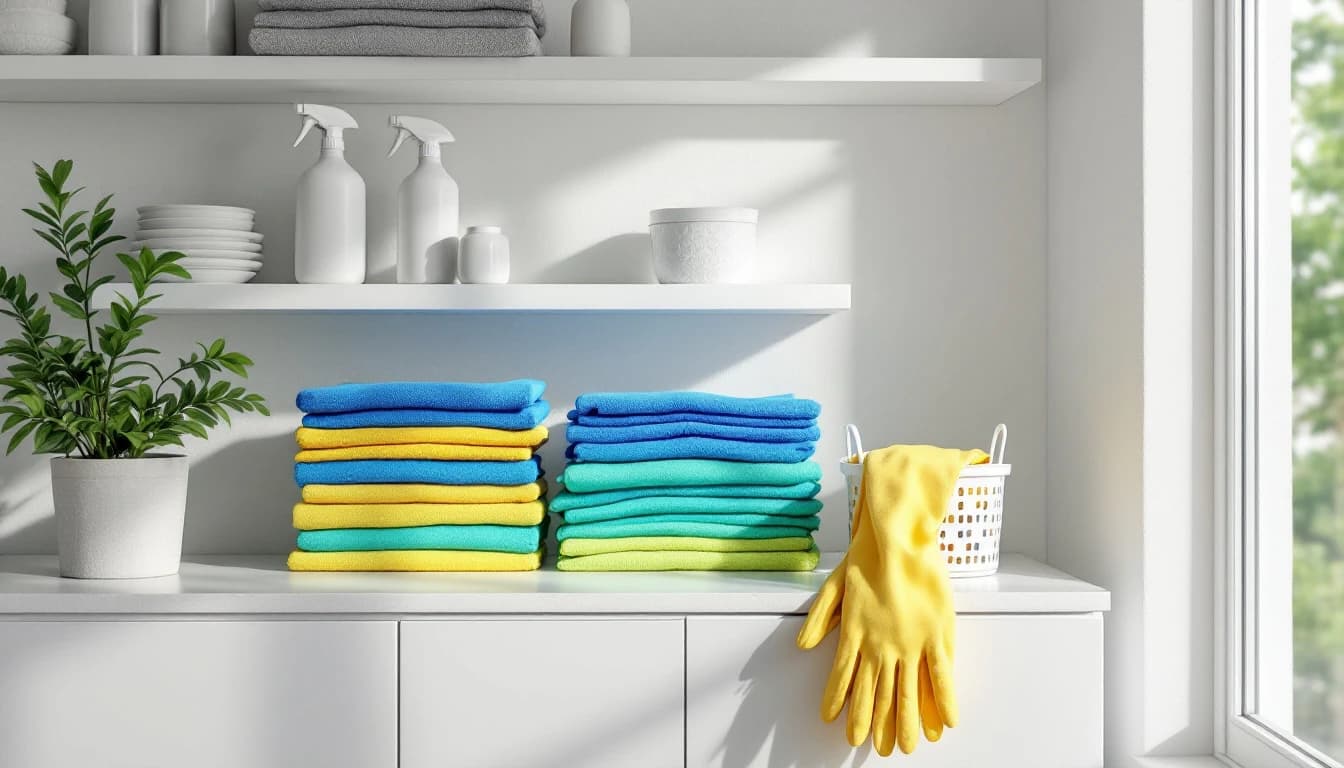
A useful habit is to give each product its own cloth color. A cloth that carried glass cleaner should not be the one that picks up bleach spray a minute later, and color-coding makes that easy to follow for everyone in the house.
If you find yourself wanting to combine two products because neither is working, that is usually a sign the stain needs a different tool, more dwell time, or a professional — not a stronger mixture.
Storage That Keeps Everyone Safe
- Store acids and bleach apart — different shelves or different bins, so a leak from one cannot reach the other.
- Keep products up high or locked if there are children in the home or visiting grandchildren, and away from pet areas.
- Keep products in their original containers. Never store a cleaner in a food or drink bottle.
- Close caps fully and check for leaks in the cabinet under the sink, where plumbing leaks can also soak packaging.
- Dispose of old products according to local household hazardous waste guidance rather than pouring leftovers together.
Lower-Risk Product Choices
You do not need a cabinet full of harsh chemicals to keep a home clean. Many everyday jobs are handled by dish soap and warm water, a microfiber cloth, and a single all-purpose cleaner. When you do need stronger products, choosing ones with a recognized safer-chemistry label helps. The EPA's Safer Choice program identifies products whose ingredients have been reviewed against its safety criteria, which is a practical shortcut when you are standing in the cleaning aisle.
Our guide to eco-friendly cleaning products for DFW homes goes through lower-odor and lower-toxicity options room by room, which matters most in homes with young children, pets, older adults, or anyone with asthma. If breathing sensitivity is a concern, our allergy season cleaning tips cover reducing irritants in general.
What to Do If Products Get Mixed
If you mix products or notice a sharp, unusual smell while cleaning:
- Stop and leave the area immediately, taking everyone — including pets — with you.
- Get fresh air. Open windows and doors on your way out only if you can do so without lingering.
- Do not try to neutralize it by adding another product.
- Call Poison Control at 1-800-222-1222 for guidance, which is free and available around the clock in the U.S.
- Call 911 if anyone has trouble breathing, chest pain, confusion, or severe symptoms.
- Wait before returning. Let the space ventilate fully before going back in to clean up with plenty of water.
Keep the product containers so you can tell Poison Control or medical staff exactly what was combined.
How Professional Cleaners Handle Chemicals
A good cleaning company trains its crews on exactly this: which products are used where, which are never combined, and how to ventilate and rinse between steps. It also means you do not have a crew bringing an unknown mix of products into your home.
At Laura Maid Services, our crews choose products by surface — stone-safe cleaners on granite and marble, descalers on glass and chrome, disinfectants where they belong — and they do not combine products. If someone in the home is sensitive to fragrance or chemicals, tell us when you book and we will adjust. Every cleaner is insured, bonded, and background-checked.
If you would rather hand off the heavy bathroom and kitchen work entirely, a deep clean runs $200–$450 and standard house cleaning runs $120–$250 in the DFW area, quoted flat before the crew arrives. For how size and condition affect a quote, see our Fort Worth house cleaning cost guide. Call (682) 201-2909 for a quote.
Frequently Asked Questions
What cleaning chemicals should never be mixed?
Never mix bleach with ammonia, bleach with acids such as vinegar or many toilet and limescale cleaners, bleach with rubbing alcohol, hydrogen peroxide with vinegar in one container, or two different drain cleaners. These combinations can release harmful gases or form corrosive compounds.
Is it safe to mix bleach and vinegar?
No. Vinegar is an acid, and acid combined with chlorine bleach can release chlorine gas, which irritates the lungs, eyes, and throat. If you use both on the same surface, rinse thoroughly with water and ventilate between them, or use them on different days.
What should I do if I accidentally mixed cleaning products?
Leave the area immediately with everyone, including pets, and get to fresh air. Do not add anything to neutralize it. Call Poison Control at 1-800-222-1222 for guidance, and call 911 if anyone has trouble breathing, chest pain, or severe symptoms. Let the room ventilate fully before returning.
Can I use two cleaning products on the same surface?
Only one at a time. Use the first product, rinse the surface with plain water, let it dry, and ventilate before using the second. Never combine them in the same bucket or spray bottle.
How should cleaning products be stored at home?
Keep products in their original labeled containers, store bleach and acidic cleaners on separate shelves, keep everything up high or locked away from children and pets, close caps fully, and never store a cleaner in a food or drink bottle.
Do professional cleaners bring their own chemicals?
Most professional companies bring their own supplies and train crews on which products go on which surfaces and which are never combined. Laura Maid Services chooses products by surface, does not combine products, and adjusts for households with fragrance or chemical sensitivities when you tell us at booking.