How to reduce allergens through cleaning in DFW homes: HEPA vacuuming, high-touch surfaces, dust and dander control, and when a deep clean helps most.
North Texas is hard on allergy sufferers. Cedar fever peaks in winter, tree and grass pollen roll through spring and early summer, and ragweed closes out the fall — a nearly year-round cycle that the region's dry, windy days push straight into your home. You cannot control the pollen count, but you can control how much of it settles and lingers indoors, and cleaning is the most direct lever you have. As of July 2026, this guide covers the cleaning habits that actually reduce allergens in a DFW home, the surfaces that matter most, and when a professional deep clean does more than a weekly tidy.
Where Indoor Allergens Actually Come From
The first step is knowing your enemy. The U.S. Environmental Protection Agency identifies the most common indoor allergy and asthma triggers as dust mites, pet dander, pollen tracked in from outside, and mold — and the Centers for Disease Control and Prevention echo that controlling these triggers in the home is one of the most effective ways to reduce symptoms. In a typical North Texas house, that means:
- Pollen carried in on shoes, clothing, pets, and through open doors and windows.
- Dust mites living in bedding, upholstery, carpet, and curtains, feeding on shed skin.
- Pet dander from cats and dogs, which clings to soft surfaces and floats in the air.
- Mold spores in damp spots — bathrooms, under sinks, and around windows that sweat.
The goal of allergy-season cleaning is not sterility. It is reducing the reservoir of these triggers so there is simply less to react to.
Vacuuming: Do It Right or Make It Worse
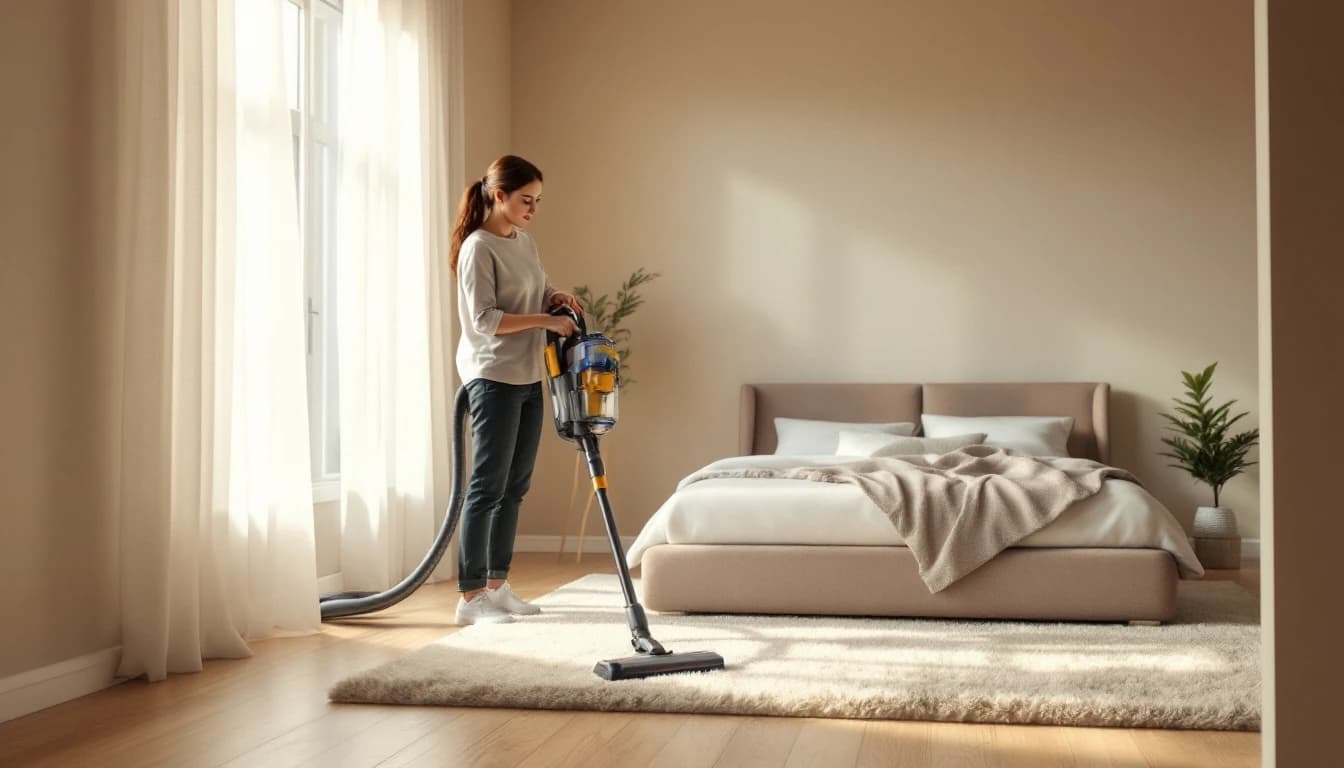
Vacuuming is the single highest-impact allergy task, but only if the vacuum captures fine particles instead of blowing them back into the air. A vacuum without proper filtration can exhaust dust mite debris and dander back into the room. A HEPA-filter vacuum captures the fine particles that matter most; the Association of Home Appliance Manufacturers publishes standards for air-cleaning devices, and the same filtration principle applies to vacuums.
- Vacuum carpets, rugs, and upholstery at least weekly during allergy season — twice weekly if you have pets.
- Move slowly; a slow pass lifts far more than a fast one.
- Vacuum the mattress and along baseboards, where dust mite debris and dander collect.
- Empty the canister or change the bag outdoors so you do not release what you just captured.
Attack Soft Surfaces
Fabrics are the biggest reservoir of allergens in most homes, and they respond well to routine attention.
- Wash bedding weekly in hot water; dust mites do not survive high heat.
- Launder or dry-clean curtains, and consider washable blinds over fabric drapes.
- Wash throw pillows, blankets, and slipcovers regularly.
- Use allergen-proof mattress and pillow encasements in bedrooms.
- Reduce clutter — every stacked pile of fabric and paper is a dust trap.
Don't Forget the Hard Surfaces
Pollen and dander settle on hard surfaces too, and a dry duster just relocates them. Use a damp microfiber cloth to trap and remove particles instead of scattering them into the air.
- Wipe down high-touch and horizontal surfaces — sills, shelves, tabletops, and electronics.
- Clean ceiling fan blades, which fling accumulated dust across the room when running.
- Damp-mop hard floors weekly rather than dry-sweeping.
- Wipe entry areas often; the doorway is where the most pollen enters.
A Room-by-Room Priority Guide
Not every room contributes equally to allergy load. Here is where to focus your effort for the biggest symptom reduction:
| Area | Main Allergen | Priority Action | Frequency |
|---|---|---|---|
| Bedroom | Dust mites | Hot-wash bedding, encase mattress | Weekly |
| Living room | Dander, dust | HEPA vacuum, damp-dust surfaces | Weekly |
| Bathrooms | Mold | Scrub, dry surfaces, ventilate | Weekly |
| Entryway | Pollen | Wipe floors, shoe-off policy | Frequently |
| Whole home | Settled dust | Baseboards, fans, behind furniture | Seasonally |
The bedroom is the top priority because you spend a third of your day there breathing close to bedding and mattress surfaces where dust mites concentrate. The entryway is the second because it is the pollen gateway — a shoes-off policy and frequent floor wiping there cut how much gets tracked deeper into the home.
Control Moisture to Control Mold
Mold needs moisture, so keeping humidity down starves it. Run bathroom exhaust fans during and after showers, fix leaks promptly, and squeegee shower glass so it dries. Around windows that condense in winter, wipe the sills and frames before mold takes hold. In DFW's humid stretches, the bathroom is the most likely place for mold to establish, which is why an allergy-focused clean gives showers, grout, and under-sink areas extra attention.
When a Deep Clean Does More Than a Weekly Tidy
Regular cleaning manages the surface, but allergens also collect in the places a weekly routine never reaches — behind and under furniture, on the tops of doors and window frames, deep in carpet, in window tracks, and inside vents and returns. A periodic deep clean clears that hidden reservoir all at once, which can noticeably reduce the baseline allergen load for weeks afterward. As of July 2026, a deep clean runs $200 to $450 depending on home size and condition, quoted as a flat rate. It is especially worth it at the start of a heavy pollen season or when a household member's symptoms flare despite regular cleaning. Our guide on what is included in a deep clean shows exactly what that covers.
Many allergy-conscious households pair a seasonal deep clean with recurring house cleaning at $120 to $250 per visit, so the home stays at a lower allergen baseline without the whole job falling on one person. If pets are your main trigger, our pet-owner cleaning guide goes deeper on dander control.
Get Help Keeping Allergens Down
Keeping a home allergen-managed through a North Texas year is real, ongoing work, and it is exactly the kind of routine that benefits from consistent professional help. We are fully insured, bonded, and background-check every cleaner, and we have served Arlington, Fort Worth, and the surrounding DFW communities since 2006. We can build a recurring plan around the high-priority tasks above, or handle a seasonal deep-clean reset. Start from your city page — for example Arlington or Fort Worth — or the Laura Maid Services home page.
Call (682) 201-2909 or email info@lauramaidservices.com for a free, flat-rate quote. Tell us your home's size and whether allergies are the priority, and we will recommend the right service and give you a straight number.
Frequently Asked Questions
What is the most effective cleaning task for reducing allergies?
Regular HEPA-filter vacuuming of carpets, rugs, upholstery, and mattresses is the highest-impact task, because soft surfaces hold the largest reservoir of dust mites and dander. Pair it with weekly hot-water washing of bedding, since dust mites do not survive high heat. A vacuum without proper filtration can make things worse by exhausting fine particles back into the air, so filtration matters as much as frequency.
How often should I clean during allergy season?
During heavy pollen periods, vacuum and damp-dust at least weekly, and twice weekly if you have pets. Wash bedding weekly in hot water. Wipe entryway floors frequently, since that is where the most pollen enters. A seasonal deep clean at the start of a heavy allergy stretch clears the hidden reservoir of allergens that weekly cleaning does not reach.
Does a HEPA vacuum really help with allergies?
Yes. A HEPA-filter vacuum captures the fine particles — dust mite debris, dander, and pollen — that standard vacuums can blow back into the room. Because soft surfaces hold most of a home's allergen load, capturing those particles rather than redistributing them is what makes vacuuming genuinely useful for allergy sufferers rather than counterproductive.
Can house cleaning reduce mold allergens?
It helps significantly when paired with moisture control. Mold needs dampness, so running exhaust fans, drying shower glass, fixing leaks, and wiping condensation off window sills starves it. Cleaning removes existing spores from bathrooms, grout, and under-sink areas — the most common indoor mold sites in DFW's humid stretches — while keeping surfaces dry prevents it from returning.
When should I get a professional deep clean for allergies?
A deep clean is most worthwhile at the start of a heavy pollen season or when symptoms persist despite regular cleaning. It clears allergens from the places a weekly routine misses — behind furniture, on high surfaces, deep in carpet, and in window tracks and vents. As of July 2026, a deep clean runs $200 to $450 depending on home size and condition, and can lower the baseline allergen load for weeks.
What surfaces should I focus on for dust and dander?
Focus on soft surfaces first — bedding, upholstery, curtains, and carpet — because they hold the most dust mites and dander. Then damp-dust hard horizontal surfaces, ceiling fan blades, and window sills with a microfiber cloth rather than a dry duster, which just scatters particles. The bedroom and entryway are the two highest-priority areas: one for dust mites, the other for tracked-in pollen.