
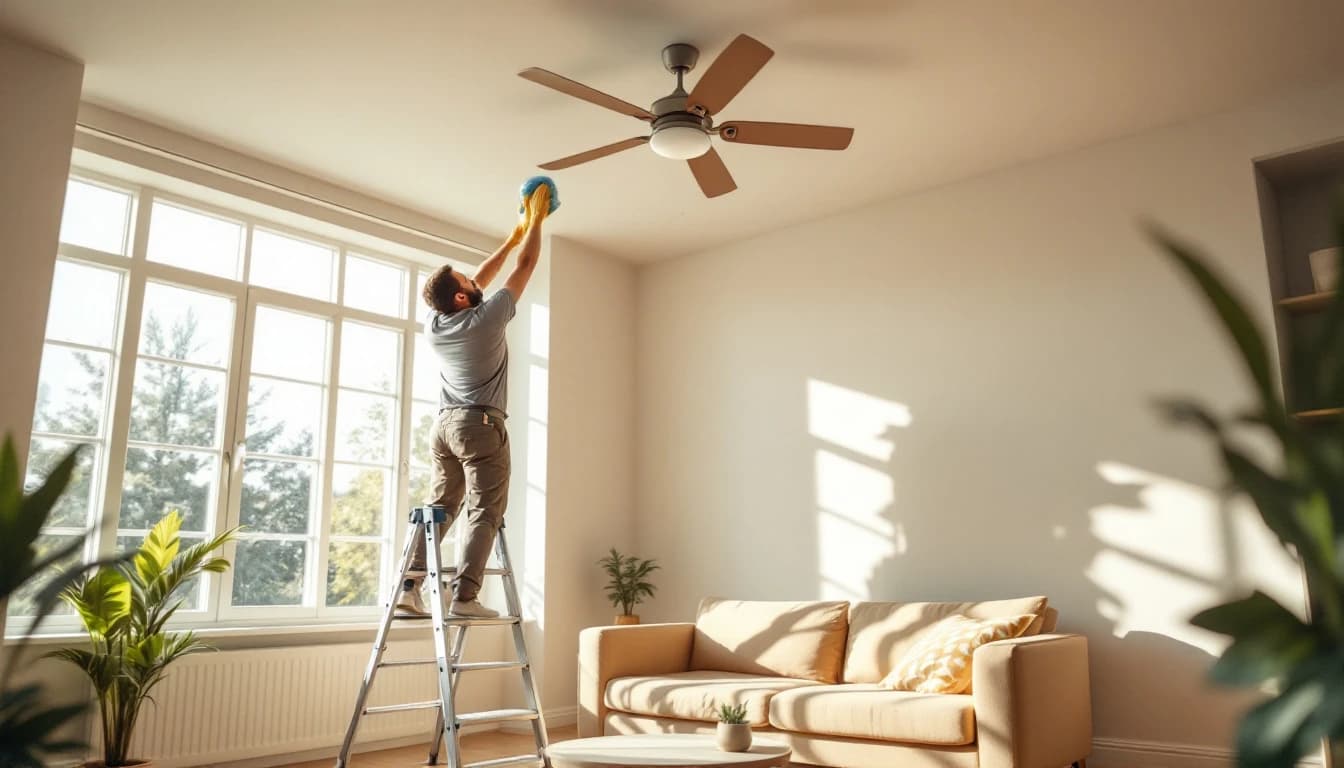
Deep cleaning in Saginaw, TX for 2026: the high and overhead dust work a standard visit skips, how often it needs repeating, and what $200-$450 covers
Ask someone in Saginaw what bothers them most about keeping their house clean and the answer is almost never the dishes. It is the dust. You wipe a coffee table on Sunday and by Wednesday it has a visible film again. You look up at the ceiling fan and cannot remember the last time anybody touched it. You pull a blind cord and a small cloud comes off the slats.
That is the problem a deep clean is built to solve here, and it is worth being precise about why. Saginaw sits in north Tarrant County alongside a working freight and grain corridor, on the flat open ground north of Fort Worth where wind carries fine particulate a long way with nothing to stop it. Add North Texas pollen — cedar in winter, oak and elm in spring, grass through summer — and a lot of what lands in a Saginaw home never came from inside it. As of August 2026, a deep clean here runs a flat $200 to $450, and the majority of that work happens above shoulder height and in the places a standard visit never reaches.
Dust Is a Reservoir Problem, Not a Surface Problem
Here is the thing most homeowners never quite put together: wiping the coffee table does not reduce the amount of dust in your house. It moves a small fraction of it into a cloth and leaves the rest where it lives.
Dust in a home accumulates in reservoirs — places where it lands, stays, and is not disturbed by anything except air movement. Ceiling fan blades. The tops of door frames and cabinet crowns. The bowl of a light fixture. The slats of an HVAC return grille. The flat top edge of a window blind. The felt of a window track. Those reservoirs hold far more than every visible horizontal surface in the room combined.
And they do not stay put. Every time the air conditioning cycles on, the system pulls air through the returns and pushes it out the supply vents, lifting a portion of what is sitting in and around them and depositing it back onto your furniture. A ceiling fan on low does the same thing more directly, throwing the felted layer off its leading edges into the room below. That is why a house can be wiped down constantly and still feel dusty by midweek: the surfaces are being cleaned, but the sources are not.
A deep clean works the reservoirs. That is the whole logic of the service, and it is why the results last longer than the visit itself. The U.S. Environmental Protection Agency's indoor air quality guidance treats regular cleaning to reduce dust and allergen buildup as one of the practical steps a household can take, and reaching the reservoirs is the version of that which actually moves the needle.
Why Saginaw Homes Take on More of It
Three things stack up here, and together they explain why Saginaw households notice dust more than the size of their homes would predict.
Open ground and prevailing wind. North Tarrant County is flat and comparatively open. Fine soil and road dust travel, and a home's envelope — doors, windows, the gaps around them — is the only thing between that and your furniture.
A working industrial and rail corridor. Saginaw's grain elevators and freight lines are part of what the city is. Practically, that means more particulate in the ambient air on some days than a purely residential suburb further east would see.
Seasonal pollen waves. North Texas runs a long allergen calendar with almost no quiet stretch. That load comes in on shoes, clothing, and pets, and then joins the same reservoirs everything else does.
None of this is a reason for alarm — it is a reason to clean the right places rather than the visible ones. Our allergy season cleaning tips for DFW homes cover the seasonal side, and our spring cleaning checklist covers the annual reset.
The High and Overhead Work
This is the part of a deep clean that separates it most clearly from a maintenance visit. A standard clean at $120 to $250 works at eye level and below because that is what maintaining a home requires week to week. The deep clean goes up.
| Overhead or high task | What it involves | How often it needs doing |
|---|---|---|
| Ceiling fan blades | Hand-wiped top and bottom, including leading edges and the motor housing | Every deep clean; twice a year in most Saginaw homes |
| Light fixtures | Bowls and shades emptied of dust and insects, glass wiped, can-light trims cleared | Every deep clean |
| HVAC supply vents and return grilles | Wiped through the slats, faces and frames cleaned | Every deep clean; returns benefit from more |
| Tops of cabinets and door frames | Hand-wiped along the full flat edge where dust settles unseen | Every deep clean |
| Blinds and shutters | Slat by slat, both faces, plus headrail and cords | Every deep clean; annually at minimum |
| Window sills, tracks and channels | Vacuumed first, then wiped, including weep channels | Every deep clean; twice a year on the sunny side |
| Crown moulding and upper trim | Hand-wiped where reachable from a step ladder | Annually |
| Baseboards and door casings | Full length hand-wiped, not spot-checked | Every deep clean |
Two of those deserve a note. Ceiling fans carry a felted layer bonded to the leading edge that a feather duster only redistributes into the room — it has to be wiped with a damp cloth, top and bottom, one blade at a time. And blinds are the task homeowners most consistently underestimate: a set of horizontal blinds in a single window is dozens of individual surfaces, both sides, and the only honest way to do it is slat by slat.
Sills, Tracks, and the Grit Problem
Window tracks deserve their own attention because they are where the two problems meet: dust from inside and grit from outside, sitting in a channel that is designed to hold water.
The order of operations matters more than most people expect. If you wipe a dry, gritty track with a damp cloth, you make mud and push it into the corners where it hardens. The right sequence is to vacuum the loose material out first with a crevice tool, then work the corners with a brush, then wipe. The weep channels — the small drainage openings in the bottom of the frame — get cleared as part of the same pass, because a blocked weep hole is how water ends up sitting on a sill.
Sills themselves collect a specific mix here: fine airborne dust, pollen, and in the warmer months a haze of insect debris. On the south and west sides of the house, sun exposure bakes that mixture onto the paint, which is why the sunny elevations of a Saginaw home often need this twice a year while the shaded sides can go longer.
What Still Gets Done at Ground Level
Leading with the overhead work does not mean the rest is skipped. A Saginaw deep clean is a full-house reset and still covers everything a standard clean does, plus the ground-level deep items.
In the kitchen that means the oven and refrigerator interiors, the greasy zone above and around the range, the backsplash, cabinet fronts, the top of the refrigerator, and the gaps where the range and refrigerator meet the cabinets. In bathrooms it means scrubbed grout lines rather than a mopped-over floor, and hard-water scale dissolved off shower glass, faucet bases, shower heads, and drains — mineral deposits need a product formulated to dissolve them plus real dwell time, which a maintenance visit has no room for. Throughout the home it means high-touch hardware, switch plates, door handles, and stair rails cleaned individually, and movable furniture shifted so the floor and wall behind it are genuinely reached.
For the general room-by-room scope, our guide to what is included in a deep clean sets it out in full.
How Often to Repeat It
Because the dust load here is steady rather than seasonal-only, the useful question is not whether to deep clean but how often to come back to it.
For most Saginaw households, twice a year hits the balance well. The strongest window is late winter into early spring — resetting fans, vents, blinds, and window channels before the heaviest pollen weeks means your HVAC system is circulating less of what it has collected. The second window is early autumn, once the summer of continuous air conditioning has finished cycling everything through the ductwork and before holiday guests arrive.
Annually is enough for a smaller, tightly sealed home with no pets, low occupancy, and someone who dusts consistently in between. Three times a year is reasonable for homes with heavy-shedding pets, an occupant with significant allergies, or a lot of window area on the exposed sides.
Between those resets, recurring maintenance at $120 to $250 keeps the visible layer under control so the deep surfaces are the only thing accumulating. Our guide to how often to deep clean a home works through the cadence question in more depth.
What It Costs and How the Quote Is Built
A Saginaw deep clean is a flat $200 to $450, quoted before we start. We do not bill by the hour, and we do not answer a pricing question with "call for pricing."
Four things move the number. Size and layout — square footage matters, but bathroom count matters more, and a two-story home adds stairs and landings. Time since the last deep clean — normally the biggest single factor, and the reason a home's first deep clean is the most expensive one it will ever get. Condition-specific work — extensive blinds throughout, heavy mineral buildup across several showers, years of cooking film above the range, or a shedding pet each add real hours. Add-ons you choose — interior windows, inside the oven, inside the refrigerator, and emptying cabinet interiors are scoped in or out explicitly.
If you want the wider pricing picture across service types, our Saginaw house cleaning cost guide lays out how standard, deep, and move-out ranges relate.
Serving Saginaw
We cover all of Saginaw for deep cleaning. The deep cleaning service page sets out the standard scope, and house cleaning covers what recurring maintenance looks like once your baseline is reset.
Laura Maid Services has cleaned DFW homes since 2003, from 3701 S Cooper St in Arlington. Fully insured, bonded, and every cleaner background-checked. Call (682) 201-2909 or email info@lauramaidservices.com for a flat quote, or start from the home page to see the full range of services.
Frequently Asked Questions
How much does a deep clean cost in Saginaw, TX?
Deep cleaning in Saginaw runs a flat $200 to $450, quoted before we start. The number depends on size and layout, the number of bathrooms, how long it has been since the last deep clean, and condition-specific work like extensive blinds, heavy mineral scale, or a shedding pet. Add-ons such as interior windows or inside the refrigerator are scoped in explicitly, so the figure you get is the figure you pay.
Why does my house get dusty again so quickly after cleaning?
Because wiping surfaces does not reduce the dust reservoirs in the home. Most of it lives on ceiling fan blades, in light fixtures, on the tops of door frames and cabinets, in HVAC vents and returns, and along blind slats and window tracks. Every time the air conditioning cycles or a fan runs, some of that is lifted and redeposited on your furniture. A deep clean works those reservoirs directly, which is why the results last longer than a surface wipe.
Do you clean ceiling fans, vents, and blinds?
Yes, and in Saginaw homes that overhead work is the core of the job. Fan blades are hand-wiped top and bottom including the leading edges, light fixtures are emptied and wiped, HVAC supply vents and return grilles are cleaned through the slats, and blinds are done slat by slat on both faces including the headrail. None of that is included in a standard clean at $120 to $250.
How often should a Saginaw home be deep cleaned?
Twice a year suits most households here, given the steady dust and pollen load. The strongest window is late winter into early spring, before the heaviest pollen weeks, so the HVAC system circulates less of what it has collected. Early autumn is the second window. Annually is enough for a small, tightly sealed home with no pets, while three times a year is reasonable with heavy-shedding pets or significant allergies.
Why is the right order to vacuum window tracks before wiping them?
Because window tracks hold dry grit, and a damp cloth turns that grit into mud that packs into the corners and hardens. The correct sequence is to vacuum the loose material out with a crevice tool, work the corners with a brush, then wipe. The weep channels in the bottom of the frame get cleared in the same pass, since a blocked weep hole is how water ends up sitting on the sill.
Does a deep clean still cover the kitchen and bathrooms?
Yes. Leading with the overhead work does not mean the rest is skipped. A deep clean includes the oven and refrigerator interiors, the greasy zone above and around the range, scrubbed grout rather than a mopped-over floor, and hard-water scale dissolved off shower glass, faucets, and drains. It is a full-house reset at $200 to $450, with the high and overhead work as the part that most distinguishes it from a standard visit.