
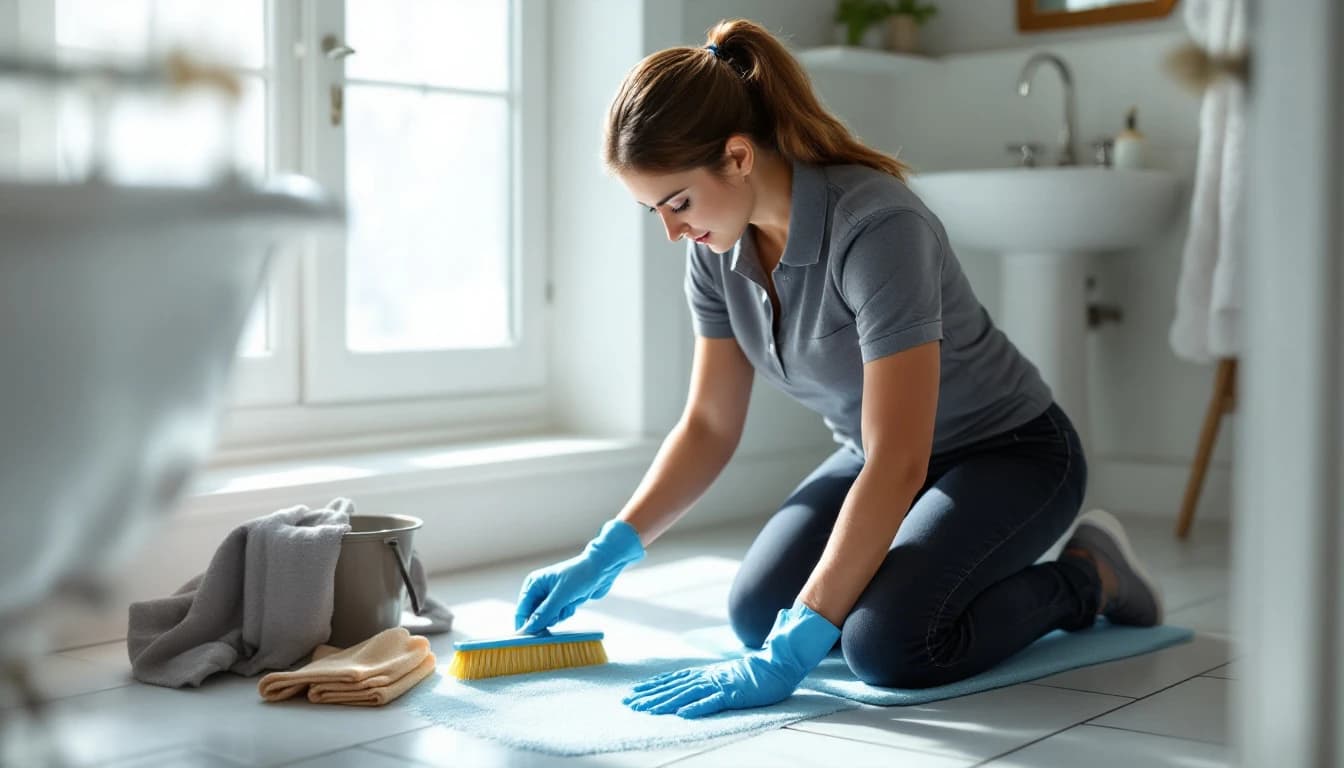
A 2026 guide to deep cleaning in Cleburne, TX: the task-by-task difference from a standard clean, why older homes need it, and the $200-$450 range
Most people booking their first deep clean want one question answered: what am I actually paying extra for? As of August 2026, a deep clean in Cleburne runs $200 to $450 against $120 to $250 for a standard visit, and the gap is not vagueness or upselling. It is a specific list of tasks a standard clean does not touch, and in Cleburne's older housing stock those tasks are exactly the ones that make a house look tired.
Cleburne is the Johnson County seat, and the housing here reflects a town that has been building continuously for more than a century. The streets around the historic downtown square and up through College Hill carry early-1900s frame houses with original wood trim and tall single-pane windows. Westwood and Westhill are largely mid-century, with original bathroom tile and narrow grout lines still in place in a lot of them. Newer construction spreads out toward Lake Pat Cleburne and the Chisholm Trail corridor. Those are three different cleaning jobs, and the older two are where a deep clean earns its price.
Standard Clean vs Deep Clean, Task by Task
A standard clean is maintenance. It keeps a home that is already in good shape looking that way: surfaces, floors, kitchen, bathrooms, trash, and the visible horizontal planes people see every day. A deep clean is a reset. It adds the vertical surfaces, the enclosed spaces, the edges, and the things that are cleaned by hand rather than wiped.
| Item | Standard clean | Deep clean |
|---|---|---|
| Counters, sinks, visible surfaces | Yes | Yes |
| Floors vacuumed and mopped | Yes, open areas | Yes, plus edges and under furniture |
| Toilets, tubs, showers | Wiped and sanitized | Scrubbed, including grout and behind the base |
| Baseboards | Spot-wiped where visible | Hand-washed, top edge and profile groove |
| Door frames and casings | Not included | Hand-washed, including top edge |
| Window sills | Wiped | Washed, with tracks cleaned out |
| Window and slider tracks | Not included | Vacuumed and scrubbed |
| Tile grout | Mopped over | Scrubbed by hand |
| Oven interior | Not included | Cleaned, with dwell time |
| Refrigerator interior | Not included | On request |
| Cabinet fronts | Spot-cleaned | Degreased front and top |
| Ceiling fans and light fixtures | Reachable dusting | Blades, housings, globes |
| Vent and register covers | Not included | Dusted and wiped |
| Switch plates and door handles | Not included | Wiped, plus surrounding wall |
| Behind and under furniture | Not included | Moved where safe |
Read the right-hand column and you can see where the hours go. Nothing on that list is fast, and almost all of it is hand work rather than machine work.
Why Cleburne's Older Homes Need the Full List
Three things about the older housing here change the job.
Profiled wood trim. A house near the square or in College Hill usually still has its original baseboards and door casings, and those have a milled profile with a groove that collects grit. A modern flat baseboard wipes clean in one pass. A hundred-year-old profiled baseboard with eight coats of paint and decades of dust packed into the groove needs a detail brush, and there are hundreds of linear feet of it in a typical house. This single item is often the most visible before-and-after in the whole job.
Original bathroom tile. Mid-century Westwood and Westhill homes frequently still have their original tile with narrow grout lines, which is the hardest grout profile to clean because there is more edge per square foot and less surface. Mopping runs over it. A deep clean scrubs it, and the difference in a small bathroom is dramatic.
Old windows and their tracks. Tall single-pane and early aluminum-frame windows have deep sills and channels that fill with a compacted mix of pollen, insect debris, and grit. In summer that channel is dry and dusty; after a wet spring it packs down into something closer to sediment. Nobody cleans these on a routine visit, which is exactly why they hold years of buildup.
There is a practical reason to care beyond appearance. The U.S. Environmental Protection Agency notes that indoor air can carry higher concentrations of some pollutants than the air outside, and settled dust on trim, sills, fan blades, and vent covers is part of what keeps particles circulating back into a room (EPA). Clearing those reservoirs is real work with a real result, not a cosmetic add-on.
The Kitchen
The kitchen is the longest single block of a Cleburne deep clean, and three items account for most of it.
The oven interior is a job by itself. Racks come out, the interior gets a treatment that needs time to work, and the crew moves to other kitchen tasks while it sits. Years of carbon does not lift in one pass, and an oven that has never been cleaned professionally sometimes needs a second treatment. If you know yours is bad, say so when you book so the day is planned around it.
Cabinet fronts and tops are the second block. Doors near a range carry an aerosolized grease film that ordinary wiping spreads around instead of removing, so it takes a degreaser and a lot of clean cloths. In older kitchens where the uppers stop short of the ceiling, the tops of those cabinets hold a grease-and-dust composite that is genuinely unpleasant and almost never touched.
The rest is the hood filter, backsplash, the wall behind the range, small appliance exteriors, the microwave inside and out, and the sink and its fixtures descaled. Refrigerator interior is available on request and worth adding if it has been a while.
The Bathrooms
Bathrooms are the second-longest block and the room most people judge the whole job by.
Grout gets scrubbed, not mopped over. Hard-water scale comes off shower glass, chrome fixtures, and the toilet bowl below the waterline, which is where North Texas water leaves its heaviest deposits. Exhaust fan covers come down and get cleaned, which matters more than it sounds: a loaded fan cover barely moves air, and poor extraction is what grows mildew in the first place. The toilet is cleaned behind and at the base, not just the bowl and seat, which is a common source of odor people blame on the drain.
Older tile responds well but has a ceiling. We will tell you where yours is before we start rather than after.
How the Day Runs and How Long It Takes
A deep clean works top-down and dry-to-wet. Dust knocked off a ceiling fan lands on a surface that has not been cleaned yet, so fans and light fixtures come first and floors come last, always. If a crew mops before cleaning the oven, they mop twice.
A two-bedroom, one-bath Cleburne home is usually a half-day job. A three-bedroom, two-bath home takes most of a working day. A four-bedroom home with two and a half or three baths, particularly an older one with original tile and trim, can run a full day. The two things most likely to stretch it past estimate are an oven needing a second treatment and heavy scale in more than one bathroom.
You do not need to be home for it. Most customers let us in, leave, and come back for a short walkthrough at the end. A lockbox or door code works fine. What genuinely helps is twenty minutes of prep: clear the horizontal surfaces you want cleaned, put away anything valuable or personal you would rather not have handled, empty the oven if interior cleaning is on the list, and secure pets away from the work area. Clear counters get scrubbed; cluttered ones get worked around.
What It Costs in Cleburne
A deep clean here is $200 to $450, quoted as a flat rate before we arrive, supplies and equipment included. We do not bill by the hour, so a slow oven is our problem rather than a growing invoice. Where you land depends on bedroom and bathroom count, how long it has been since the last deep clean, and whether the home has original tile and profiled trim. An older three-bedroom near the square with two full baths of original tile sits higher in the range than a newer three-bedroom out toward the lake, because the work is genuinely different.
After the reset, ongoing service runs $120 to $250 per visit. That is the pattern most Cleburne customers settle into: one deep clean to establish a baseline, then standard visits every two or four weeks to hold it. The Cleburne house cleaning cost guide breaks down what drives that number, and recurring house cleaning in Cleburne covers how frequency changes what each visit costs. If you are moving rather than maintaining, the Cleburne move-out cleaning guide is the one to read instead.
What a Deep Clean Cannot Fix
We would rather set expectations before the invoice than after.
Grout that has absorbed pigment into the cement over sixty or a hundred years will improve, sometimes dramatically, but may not return to white. That outcome needs sealing or re-grouting. Shower glass etched by years of untreated hard water will be clean but can still read faintly cloudy, because the mineral has pitted the surface. Tile that has lost its glaze, worn chrome, and stained caulk are repair items, not cleaning items — caulk in particular, because once mildew grows into it, replacement is the only real fix and it is inexpensive to do.
A deep clean is also not organizing, and it is not painting. Trim that is dirty comes clean; trim where the paint itself has failed comes clean and still looks worn.
We have cleaned Cleburne and the surrounding Johnson County communities since 2003, we are insured and bonded, and every cleaner is background-checked. Call (682) 201-2909 or email info@lauramaidservices.com for a free flat-rate quote. Full scope is on our deep cleaning service page, local details at deep cleaning in Cleburne, ongoing service at Cleburne house cleaning and the standard house cleaning page, and everything we offer in town on the Cleburne services hub. If you want the room-by-room checklist in more detail, what is included in a deep clean goes through it line by line.
Frequently Asked Questions
What is the difference between a standard clean and a deep clean in Cleburne?
A standard clean maintains a home that is already in good shape: surfaces, floors, kitchen, bathrooms, trash. A deep clean adds hand-washed baseboards and door frames, window and slider tracks, scrubbed grout, oven interior, cabinet fronts and tops, ceiling fans, vent covers, switch plates, and cleaning behind and under furniture. It is a reset rather than maintenance, which is why it costs $200 to $450 instead of $120 to $250.
How much does a deep clean cost in Cleburne, TX?
A deep clean in Cleburne runs $200 to $450, quoted as a flat rate before we arrive with supplies and equipment included. Bedroom and bathroom count, how long it has been since the last deep clean, and whether the home has original tile and profiled wood trim determine where you land. Call (682) 201-2909 for a free quote with no obligation.
Why do older Cleburne homes take longer to deep clean?
Homes near the historic downtown square and in College Hill usually have original profiled wood baseboards and door casings, which need a detail brush rather than a single wipe. Mid-century Westwood and Westhill homes often keep original bathroom tile with narrow grout lines, which is the slowest grout profile to scrub. Older windows also have deep sills and tracks that hold years of packed grit.
Do I need a deep clean before starting recurring service?
Usually yes, if the home has not had one recently. A standard visit is scoped to hold a baseline, not create one. Starting with a deep clean means the first recurring visit begins from a clean edge instead of spending its whole window catching up on baseboards and grout, and it keeps the ongoing cost in the $120 to $250 range rather than creeping upward.
Will a deep clean restore my old tile grout?
It will improve it, often noticeably, but it may not return it to the original color. Grout in homes built decades ago has usually absorbed pigment into the cement itself, and that is not a cleaning problem. We remove everything sitting on the surface and take it as light as scrubbing can, then tell you honestly whether sealing or re-grouting is what you actually need.
How long does a deep clean take?
A two-bedroom, one-bath home is typically a half-day. A three-bedroom, two-bath home takes most of a working day. A four-bedroom home with two and a half or three baths can run a full day, especially with original tile and trim. An oven needing a second treatment and heavy hard-water scale in more than one bathroom are the two things most likely to extend it.