
2026 Waxahachie, TX move-out cleaning guide: $200-$500 flat rate, and how to clean Victorian woodwork, plaster, old glass and original porcelain safely
Waxahachie is the seat of Ellis County, and it carries that history in a way very few North Texas cities still do. The 1895 courthouse anchors a downtown square that was never flattened and rebuilt, and the streets spreading out from it hold one of the largest collections of Victorian and gingerbread homes in Texas, a great deal of it inside a designated historic district. Not every move-out here happens in a hundred-year-old house. Plenty are ordinary subdivision turnovers on the edges of town. But a real share of them are not, and those jobs run on different rules.
The difference is not that old houses are dirtier. It is that an old house contains material nobody can buy back. A four-panel door carrying its original shellac, its original mortise hardware and a century of patina cannot be replaced at any price, because the exact thing that makes it valuable is the thing a strong cleaner takes off. In a historic Waxahachie home the worst move-out outcome is not a dirty baseboard. It is a stripped one.
As of August 2026, a move-out clean is $200 to $500 as a flat rate agreed before anyone starts work. What follows is not a list of ways to clean harder. It is how a crew that has worked these houses decides how far to go, and why the correct answer in an old home is so often the gentlest one available.
An Old House Is Not a Dirty House
The first mental adjustment is the hardest. Age reads as grime. Shellac that has ambered over ninety years looks like a film somebody neglected to wipe off. Plaster settled into faint hairline patterns looks like it needs washing. Original glass with a soft ripple in it looks smeared no matter how many passes you make. Porcelain gone slightly matte at the bottom of a tub looks like a stain.
None of those are soil, and every one is a trap. Attack them with a degreaser and a scrub pad and you are not removing dirt, you are removing finish - permanent, obvious under raking light, and vastly more expensive than the smudge that started it.
An owner in the historic district is not grading you against a new build. They already know their trim is dark and their walls are not flat. What they are checking is whether anything got worse on your watch.
The Test That Decides Every Call: Can You Undo It?
Conservation practice reduces to one question, and it works as well on a Thursday walkthrough as it does in a museum: if this goes wrong, can it be reversed?
Dust is reversible. Water on a sealed surface, wiped dry immediately, is reversible. Solvent on shellac is not. Abrasive powder on original porcelain is not. A putty knife against soft old glazing is not. Once you are on the wrong side of that line, no amount of care afterward puts the material back.
So the working sequence in a historic house is deliberately boring. Dry first. Then the least aggressive wet method that could plausibly work, tested where nobody sees. Then stop and look before escalating. Most surfaces in an old house never need step three, and the ones that seem to need it most are usually the ones that can least survive it.
Original Features, Their Risks, and the Conservative Move
This is the summary a crew works from before touching anything. The middle column is what actually goes wrong. The right column is the version that protects the house.
| Original feature | The risk | The conservative approach |
|---|---|---|
| Shellacked or varnished woodwork, trim and stair rails | Alcohol, ammonia and solvent-based cleaners dissolve shellac on contact, leaving cloudy white blooms and sticky patches that cannot be wiped back | Dry dust first, then a barely damp cloth with plain water on hand-soil areas only, dried instantly; nothing containing alcohol, ammonia or citrus solvent |
| Plaster walls over wood lath | Water soaks in rather than beading off, softening the surface and lifting old distemper or calcimine paint; pressure opens hairline cracks | Vacuum with a soft brush, spot-clean with a nearly dry cloth, no wet washing of whole walls, no magic-eraser pads |
| Transom windows and original wavy glass | Old glass is thin, unevenly stressed and set in brittle glazing putty; pressure at the center or a scraper at the edge cracks it | Support the pane with one flat hand, clean with a damp microfiber and a dry buff, keep tools and blades entirely off the glazing line |
| Claw-foot tubs and original porcelain fixtures | Abrasive powders and stiff pads dull the glaze permanently, and the dulled surface then holds stains worse than before | Non-abrasive liquid cleaner, soft cloth, a second gentle application rather than more force, and rust marks left documented rather than scoured |
| Painted-over original hardware and mortise locks | Stripping or picking at paint gouges the surrounding wood and can damage irreplaceable period hardware | Dust and damp-wipe as found; leave paint removal to the owner and a specialist who can decide whether the hardware is worth uncovering |
| Pier-and-beam wood floors | Standing water travels through board gaps into the crawl space side and swells the boards; heavy soaking is the one common way to ruin an original floor in an afternoon | Vacuum thoroughly, then a well-wrung flat mop with the minimum moisture that works, drying behind yourself board by board |
Woodwork and Shellac: The Single Biggest Loss Risk
If a historic Waxahachie house has one feature that determines its value, it is the woodwork. Deep baseboards, window and door casings, picture rails, wainscot, a newel post and stair rail that were shaped a hundred and twenty years ago and never replaced. This is also where the most damage gets done at move-out, because the finish that has kept that wood alive is frequently shellac, and shellac has one famous weakness.
Shellac dissolves in alcohol - an inconvenient fact, because alcohol turns up in a huge range of household cleaners, along with ammonia in most glass sprays and solvents in most furniture polishes. Wipe any of them across an original stair rail and you do not lift dirt off the surface, you liquefy the surface. It goes cloudy, it goes sticky, and it dries into a blotch that catches the light from every angle in the room.
The safe method is dull and effective. Dust dry, along the grain, top to bottom, with a soft cloth or vacuum brush, because most of what you see on old trim is dust sitting in profile detail rather than anything bonded to it. Where there is genuine hand soil, use a barely damp cloth with plain water and dry immediately behind. That is the whole procedure, and it looks like too little right up until you compare it against a wall somebody polished. The same rule covers built-ins, transom trim and the inside faces of original closet doors. If you cannot identify a finish, treat it as shellac and stay dry.
Plaster Is Not Drywall
The walls here are usually plaster over wood lath, and they behave nothing like drywall. Drywall has a paper face that sheds a damp wipe. Plaster is porous and absorbs, so water goes in rather than off, and the paint layer on top may lift as soon as it is wet.
You can feel the difference too. Press drywall and it is rigid. Press old plaster and there may be a slight give where the keys behind the lath have loosened over decades. Leaning into that spot with a scrub pad turns a settled area into an open crack, and a crack that appeared during your tenancy is very hard to argue was already there.
The correct pass is a vacuum with a soft brush head from the ceiling down, corners and picture-rail lines included, then spot-cleaning with a nearly dry cloth only where there is a specific mark. No whole-wall washing, and no abrasive sponge pads, which are effectively fine sandpaper and burnish or remove old paint in a shape exactly the size of the pad. A documented mark is a discussion; a scoured patch of missing paint is a plastering bill.
Glass, Porcelain and Hardware: Three Things You Cannot Reorder
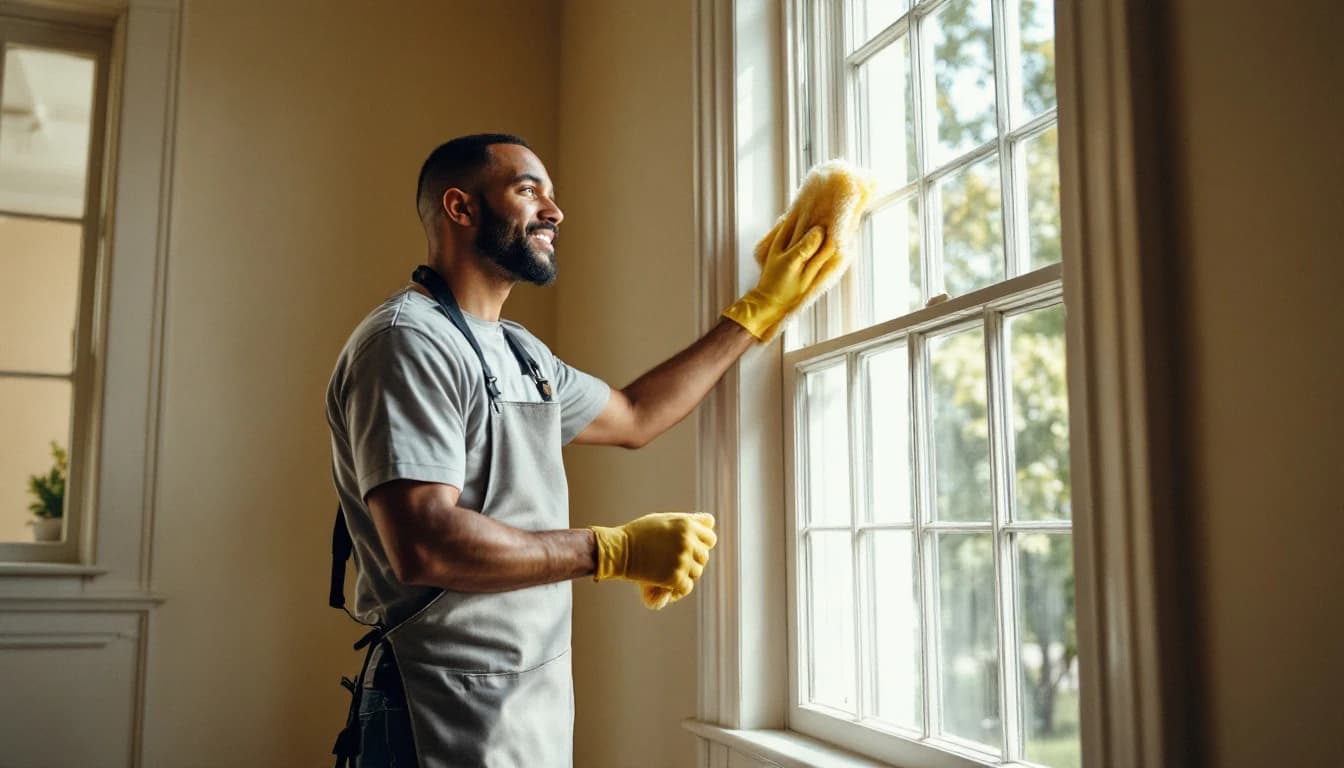
Old glass is worth cleaning carefully because it is worth having. The gentle ripple in original panes is prized in the historic district precisely because modern replacements are dead flat and obvious from the street. That glass is thinner than modern glazing, unevenly stressed, and held in brittle putty. Clean it with a damp microfiber and a dry buff, support the pane with a flat hand rather than pushing at one point, and keep blades and scrapers away from the glazing line. Transoms above doors deserve the same and usually have not been touched in years.
Original porcelain - a claw-foot tub, a pedestal sink, a wall-hung basin - fails the way tile glaze fails: abrasives. Scouring powder brightens it once and then leaves a microscopically rough surface that grabs every future stain and never comes fully clean again. Non-abrasive liquid cleaner, a soft cloth and a second patient application does more, and a rust ring under a dripping tap is a plumbing symptom to report rather than a cleaning failure to attack.
Hardware surprises people. Original mortise locks, rim latches, cast hinges and window lifts have real value even under three coats of house paint, and paint removal is a specialist decision belonging to the owner. Dust it, wipe it, leave it. Nothing gained from a stripped hinge is worth the gouge left in a hundred-year-old jamb getting there.
Floors That Move, and Why That Is Normal
Most of these houses sit on pier and beam, so the floor is a wood structure suspended over a ventilated crawl space rather than a slab. Two things follow. Floors slope, doors sit slightly out of square and boards creak - none of which you caused or can clean away, and no reasonable owner treats it as such.
More importantly, water has somewhere to go. On a slab a flooded mop is a drying problem. On pier and beam, water runs between boards, wets the joists and swells the boards from below, which is how a floor that survived a century gets cupped in one afternoon. Vacuum thoroughly first, use a well-wrung flat mop, work in small sections and dry behind yourself. Skip the steam mop entirely on original wood.
What the Owner or the Buyer Is Actually Checking
A landlord with a historic property, or a buyer touring one, is not running a suburban inspector's list. They will check that the kitchen and baths are genuinely clean, of course. But what they linger on is the condition of fabric: is the trim finish continuous, are the plaster surfaces unmarked, is the glass intact, is the porcelain still glossy, is the original hardware all still there.
Which is why the right instruction here is so counterintuitive. Do the ordinary cleaning thoroughly - appliances, cabinet interiors, bathrooms, floors, fixtures, windows - and treat every original surface as something to preserve rather than restore. Dirt is temporary. Finish is not.
Booking a Waxahachie Move-Out
To quote your job we need bedrooms, full and half baths, approximate square footage, and confirmation the home will be empty when we arrive. Say up front if the house is historic, and mention what is original in it - shellacked trim, plaster walls, a claw-foot tub, transoms, pier-and-beam floors. Those details change how a crew works and what they bring, even when they do not change the square footage at all, and we would much rather plan for them at the quote than meet them at the front door.
The number comes back as one flat rate inside the $200 to $500 range, agreed before anyone starts. Not an hourly meter that only reveals its total when the crew is loading up, and not a call-for-pricing dodge that makes it impossible to compare two companies during the week you have the least time to spare. Laura Maid Services has cleaned across DFW since 2003, we are insured and bonded, and every cleaner is background-checked, which matters on a job that usually happens after the keys have already changed hands.
Call (682) 201-2909 or email info@lauramaidservices.com with your walkthrough date. Start from the Waxahachie cleaning services hub or go straight to Waxahachie move-in/out cleaning, and the move-in/out service page explains what a turnover includes everywhere we work. A house that has not had a full detail in years is often closer to a deep clean than a standard turnover. If your concern is mid-century materials rather than Victorian ones, the Mesquite guide to period finishes covers that end of the housing stock. We also serve neighboring Midlothian and handle regular house cleaning in Ovilla once you are settled, and every city we cover is listed on the home page.
Frequently Asked Questions
Can I use furniture polish or a wood cleaner on original trim before a walkthrough?
Not safely. Most original woodwork in Waxahachie's historic homes is finished in shellac or old varnish, and the alcohol, ammonia and citrus solvents common in polishes and sprays dissolve shellac on contact, leaving cloudy blooms and tacky patches that cannot be wiped back off. Dust dry along the grain, then use a barely damp cloth with plain water only where there is real hand soil, drying immediately behind.
How do I clean plaster walls without cracking or crumbling them?
Vacuum them with a soft brush attachment from the ceiling down rather than washing them. Plaster is porous and absorbs water instead of shedding it, and old paint layers on top can lift as soon as they are wet, so whole-wall washing is the wrong tool. Spot-clean specific marks with a nearly dry cloth, never use an abrasive sponge pad, and photograph anything that will not come off gently.
Is it safe to clean old wavy window glass?
Yes, with support and without tools. Original panes are thinner and more unevenly stressed than modern glass and sit in brittle old glazing putty, so press flat with a supporting hand rather than at one point, use a damp microfiber and a dry buff, and keep blades and scrapers entirely off the glazing line. Transom windows above doors are usually the dirtiest and the most rewarding ten minutes in the house.
What removes rust rings and stains from a claw-foot tub?
Non-abrasive liquid cleaner, a soft cloth and a second patient application - never a scouring powder or a stiff pad. Abrasives brighten original porcelain once and then leave the glaze microscopically rough, so it holds every future stain worse and can never be fully cleaned again. A rust ring under a tap is usually a slow drip to report to the owner rather than a cleaning failure to attack.
Should I strip paint off original door hardware while I clean?
No. Painted-over mortise locks, hinges and window lifts still have real value, and whether to uncover them is the owner's decision and a specialist's job, not a move-out task. Picking or using solvent risks gouging century-old jambs and doors, which turns something you were never responsible for into damage you are.
Does a historic home cost more to clean at move-out?
It sits in the same $200 to $500 flat-rate range, quoted up front from bedrooms, bathrooms, square footage and whether the home is empty. Historic homes often carry more hand-detail time than their square footage suggests, because deep trim profiles, transoms, original bath fixtures and plaster all have to be worked slowly and dry rather than quickly and wet. That time is inside the quoted number, not added afterward.